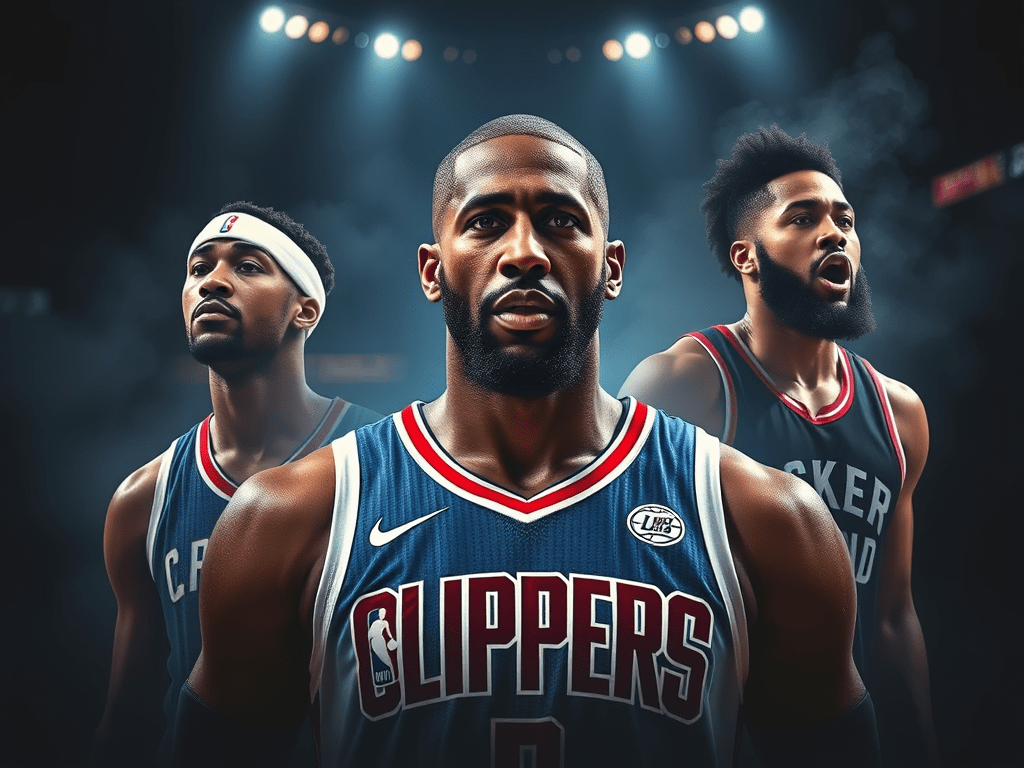
EP 14 The world of professional sports is constantly evolving, with players making unexpected moves that reshape the competitive landscape. One of the most intriguing recent developments is Chris Paul’s return to the Los Angeles Clippers on a modest $3 million contract. This homecoming represents a significant shift in Paul’s career trajectory, especially considering he played all 82 games last season with the San Antonio Spurs at 39 years old—a remarkable feat that even LeBron James hasn’t accomplished.
The Clippers’ roster now features an impressive collection of talent, including Kawhi Leonard, James Harden, and Bradley Beal. While this team certainly looks formidable on paper, health concerns remain the biggest question mark, particularly regarding Leonard’s availability. When healthy and in rhythm, Kawhi remains one of the league’s elite players, but his frequent absences have disrupted team chemistry in recent seasons. The addition of Brook Lopez as a backup center adds valuable depth and three-point shooting to complement the star-studded lineup.
The conversation about athlete health has expanded beyond traditional recovery methods, with more players exploring cutting-edge treatments like BPC 157. This peptide, known as Body Protective Compound, naturally occurs in the body and reportedly assists in healing muscles, joints, and ligaments. While expensive (approximately $300 per month), it represents the growing trend of professional athletes investing heavily in longevity and injury prevention. As careers extend well into players’ late 30s and even 40s, these advanced recovery tools become increasingly valuable for maintaining performance.
Meanwhile, the entertainment world continues to intersect with sports in fascinating ways. The tragic death of actor Malcolm Jamal Warner, who drowned in Costa Rica at age 52, reminds us of the fragility of life even for those in the public eye. Warner, best known for his role as Theo Huxtable but more recently appearing in shows like “Sneaky Pete,” represents the unexpected ways careers evolve and intersect across industries.
The sports world has also been rocked by serious off-field controversies, particularly a recent scandal involving hockey players accused of sexual assault. Though five players were acquitted, the case highlights troubling patterns of behavior that persist across professional sports. Teams and leagues often attempt to protect their athletes and brands from negative publicity, sometimes at the expense of proper accountability. The conversation around athlete behavior extends to domestic violence issues that have plagued leagues like the NFL, where the Cleveland Browns’ recent first-round draft picks have faced domestic violence allegations.
These incidents force us to confront difficult questions about the cultures surrounding professional sports. When players are conditioned to be aggressive on the field or court, how does that mentality translate to their personal lives? While there’s never an excuse for violence, the prevalence of these issues suggests deeper structural problems that require addressing.
The modern era of smartphone cameras and social media has dramatically changed the accountability landscape. Behaviors that might have remained hidden in previous generations now frequently emerge on video, creating immediate consequences for athletes who violate social norms or laws. This increased transparency has forced leagues to take more proactive approaches to player behavior and accountability.
As we navigate these complex intersections of sports, entertainment, health, and personal conduct, one thing remains clear: the world of professional athletics continues to evolve rapidly, both in how players approach their careers and how we as a society evaluate their actions both on and off the field. The conversations around these issues reflect broader societal questions about fame, responsibility, and the human capacity for both excellence and failure.
WATCH MORE PODCAST EPISODES HERE: https://www.youtube.com/playlist?list=PLBmAJknu27s_KnQ7cbUD7PGCwc6Q09xwW
 YOU WOOD THINK?
Leave a comment